Ad placeholder
Call of the Blood

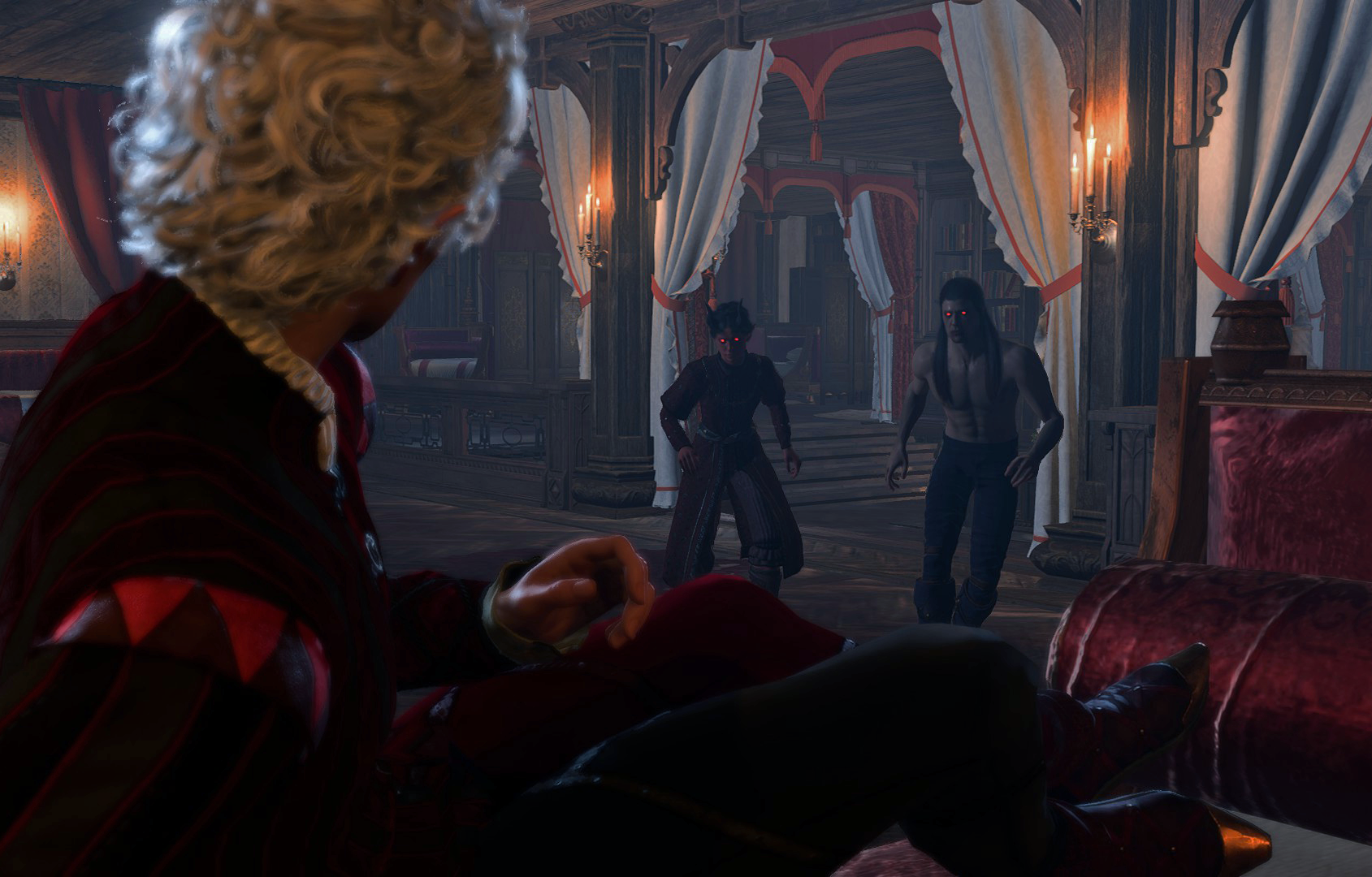
Call of the Blood is a personal quest for 


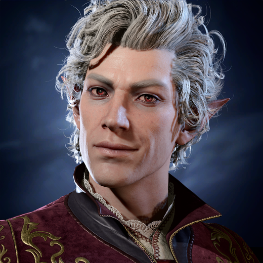
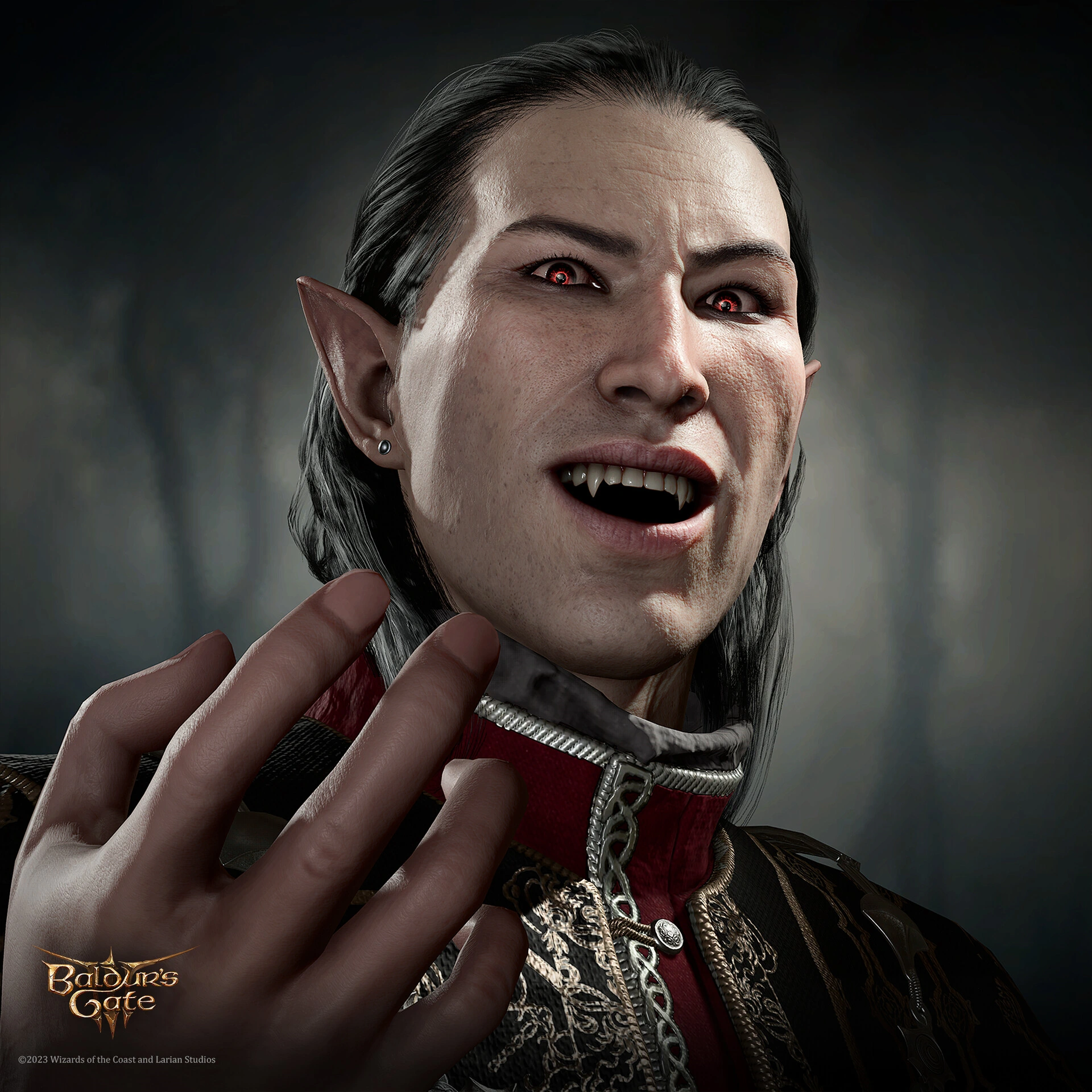
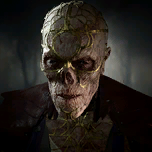
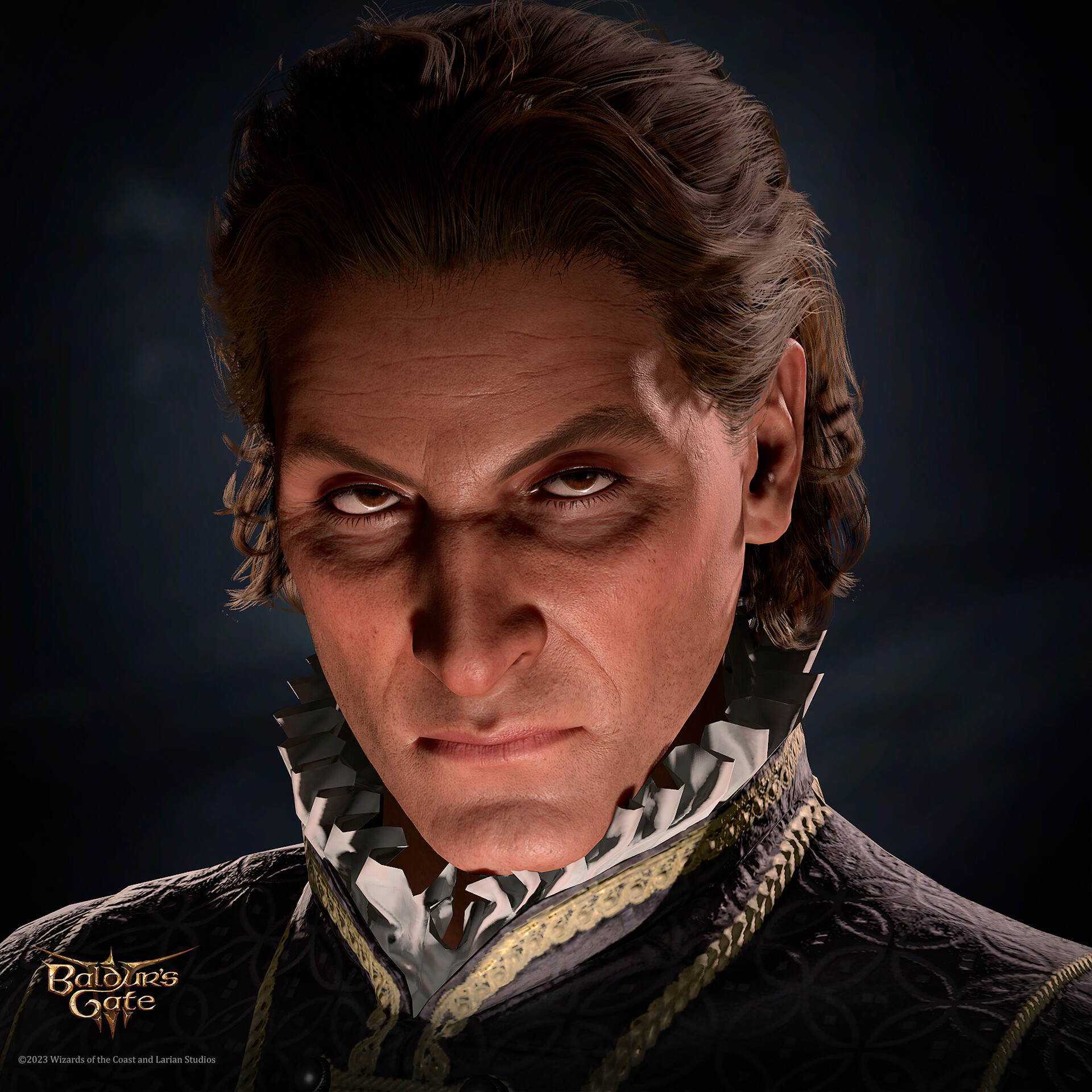
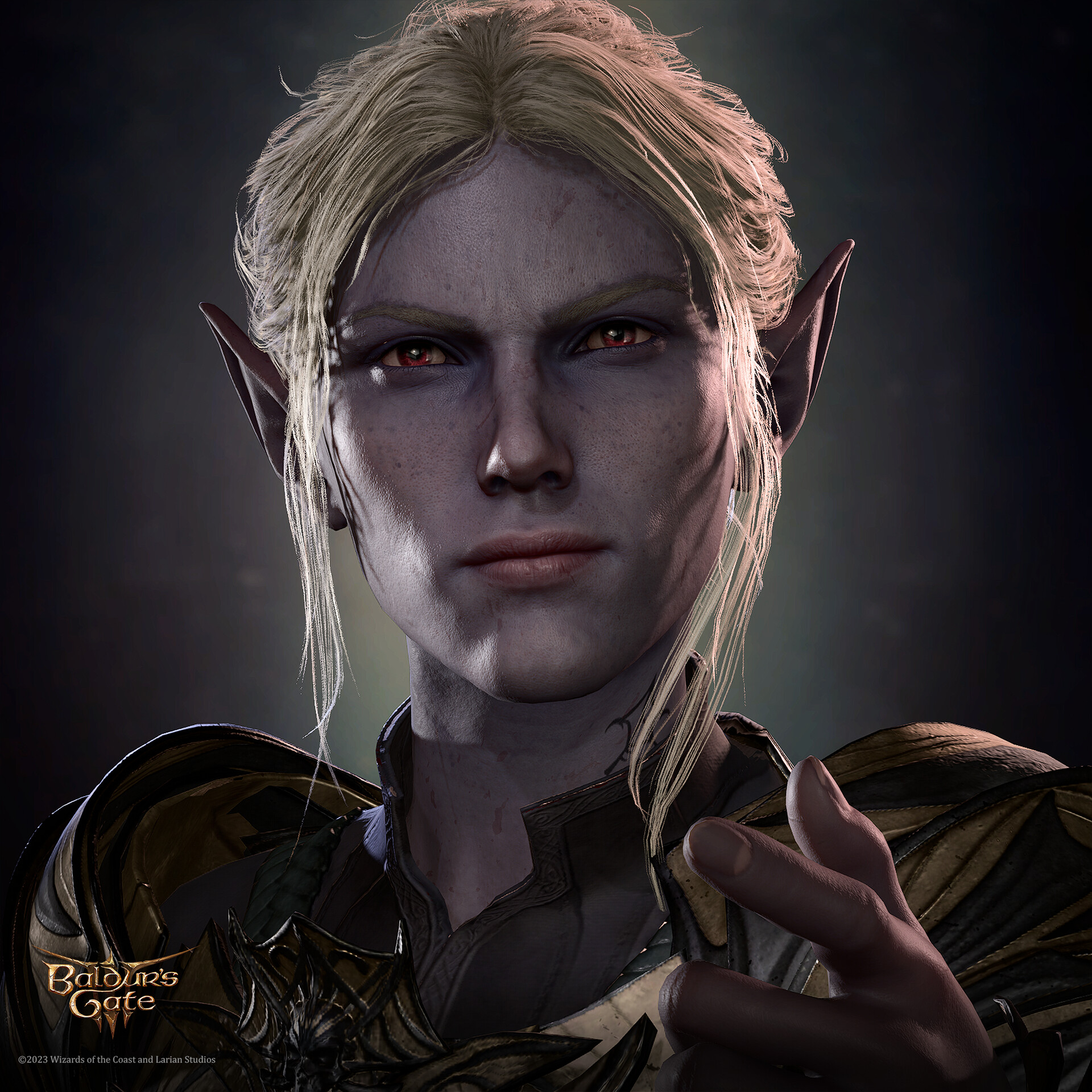
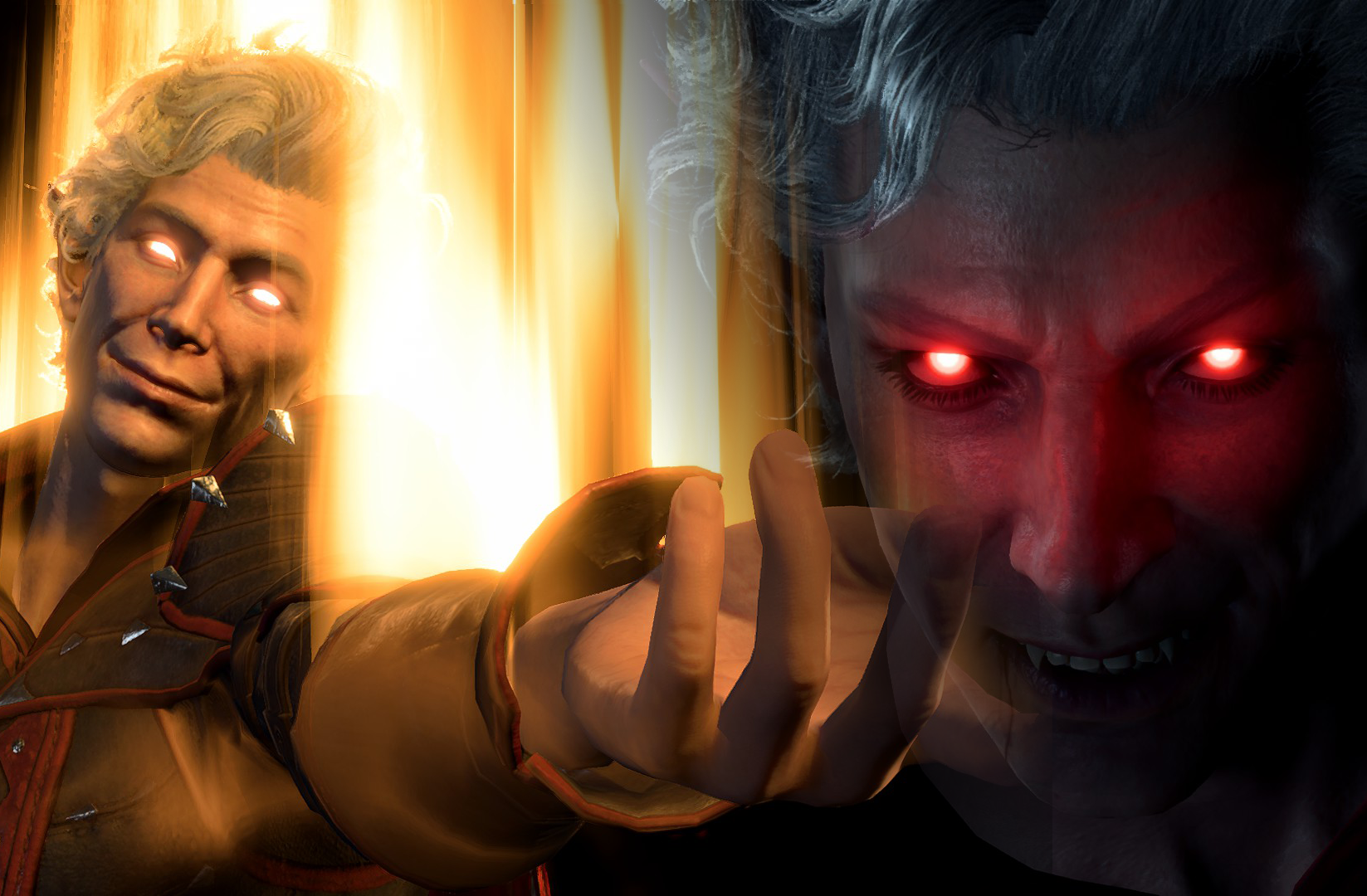
“Hello, darling. Don't be shy, I promise not to bite until we've been formally introduced. My name's Astarion, and I've spent a century stalking the night, hunting for pretty morsels just like you.
A man called Cazador made me what I am, kept me like a pet, and forced me to do his bidding. No more. The tadpole's influence broke his dominance over me, and now I can finally pursue the one thing I've hungered for these long, dark years.
Revenge.
I'm going back to Baldur's Gate, to track Cazador down in his lair. I'll be the last thing the bastard ever sees.„
Objectives[edit section | visual editor]
Objectives and journal entries may vary pending story decisions and outcomes.
Playing as Astarion Origin[edit section | visual editor]
As a playable character, Astarion is naturally locked out of multiple interaction cutscenes that may occur when playing as any other character, including Custom (Tav) and the 
Act One[edit section | visual editor]
Realizing his freedom[edit section | visual editor]

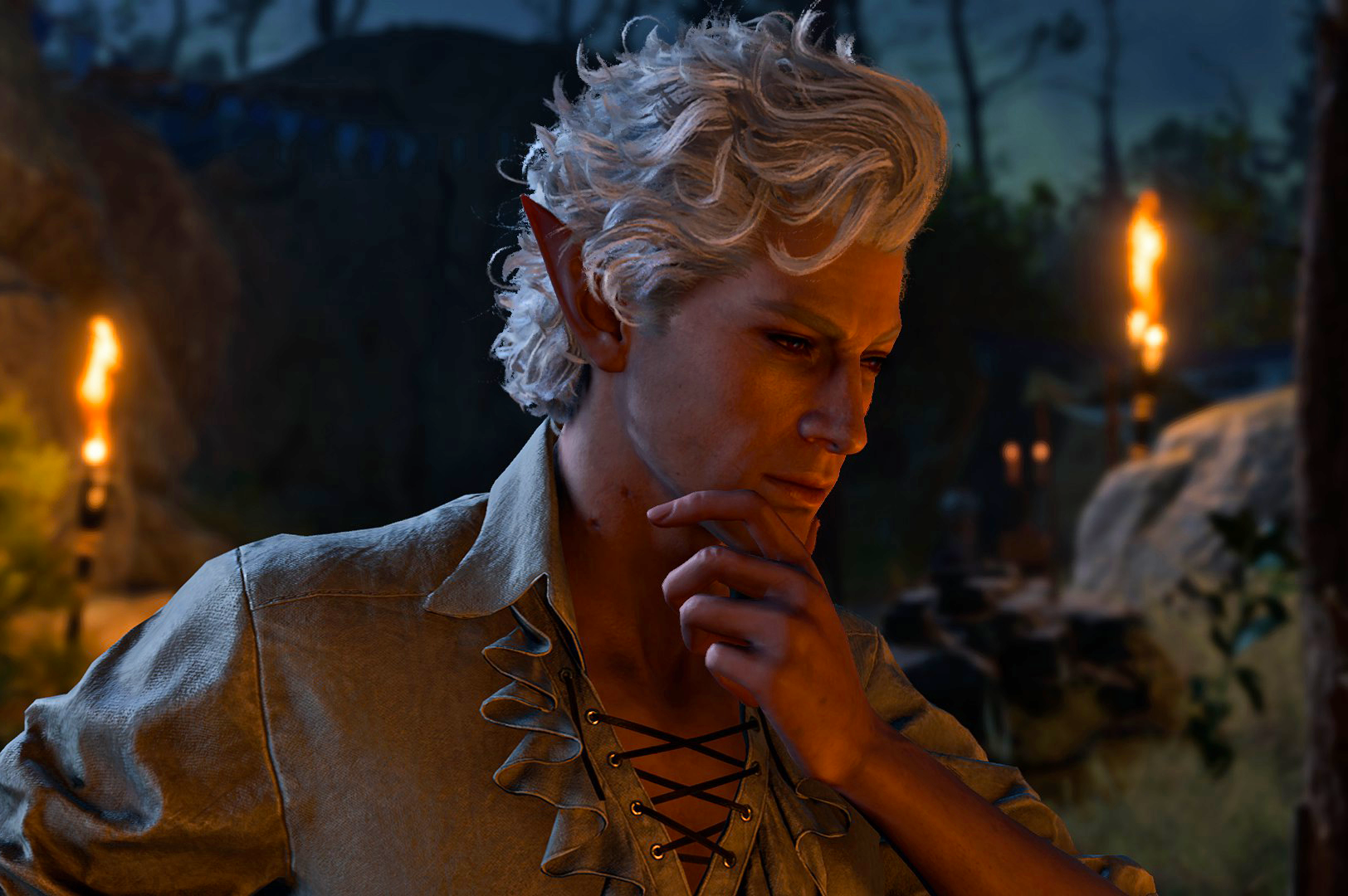
The very first long rest in Act One (if he has not left the crash site yet) shows Astarion contemplating his newfound freedom:
*Just yesterday you were seducing a young noble, luring him to your master's lair.*
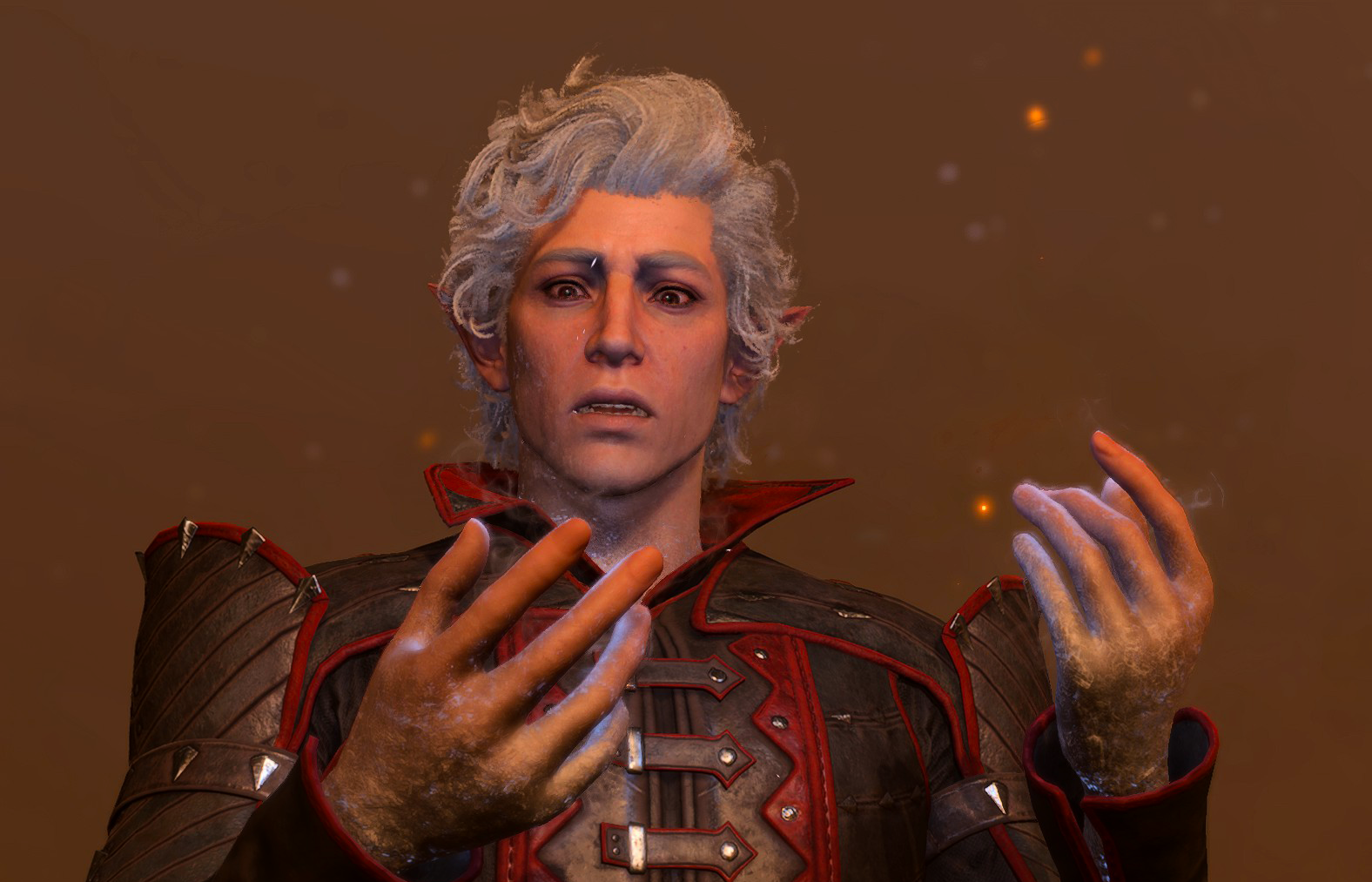
*Today? You'd been kidnapped by mind flayers, chased through Hell by dragons, and thrown out of a burning ship.*
*And you felt the sun on your skin...*
*You should have burst into flames.*
Astarion can choose to think about where to find an expert on solving the tadpole problem (requires 
Dreaming of Cazador[edit section | visual editor]
Having at least one companion and exploring the Wilderness past the crash site unlocks a dream sequence in which Astarion wanders through a forest, haunted by the voice of his former master, 
Vampirism acceptance[edit section | visual editor]
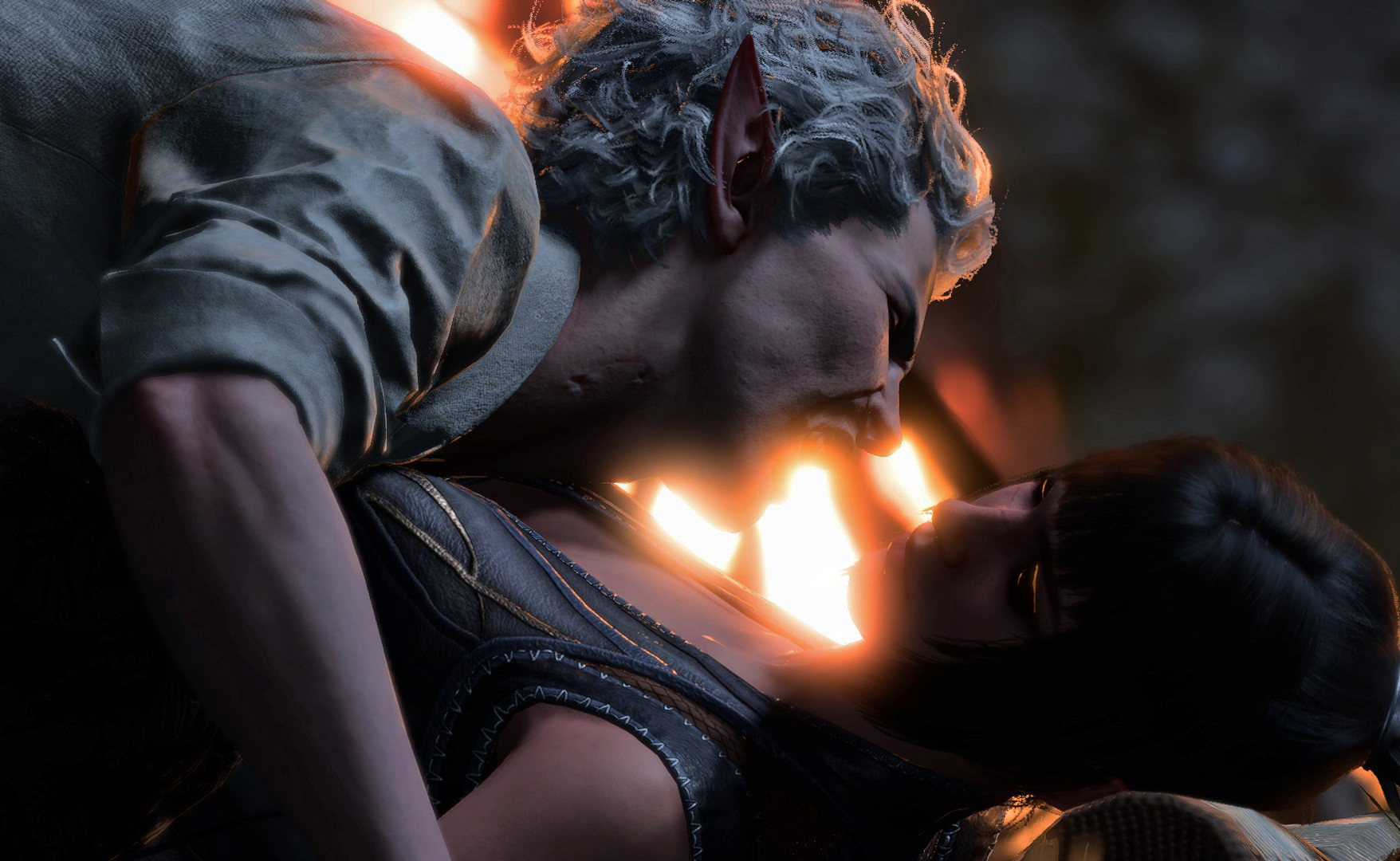
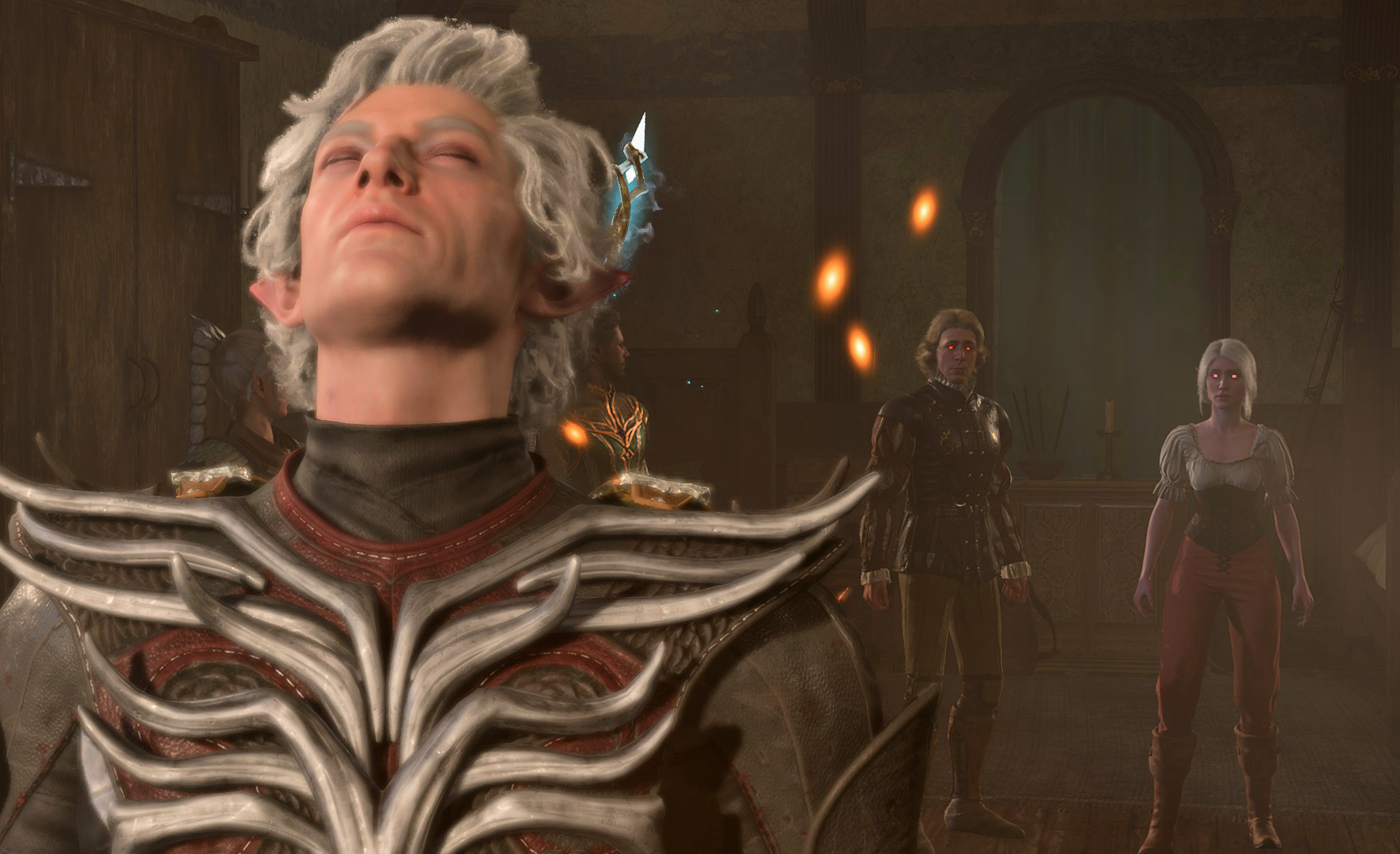
Following the nighttime dream sequence during a long rest, Astarion as an Origin character has the option to attempt to bite a companion. This interaction plays out in distinct phases. First, Astarion must pass a
If the initial stealth check is successful, Astarion begins feeding, which triggers a 

If both the stealth and wisdom checks are successful, the act remains a secret. The targeted companion wakes up with the 


The blood-drinking interaction has two exceptions: 

Unless Astarion's vampirism is later revealed, he has the option to voluntarily confess his secret to his companions; most of whom state they suspected it all along. Companions' reactions depend on their current Approval level and ability check outcomes. Afterwards, Astarion's condition is known within the party and he may use his 
However, this mechanism is not without some logical errors. For example, in the romance scene with 
Unlike companion playthrough, the
If Astarion continues to conceal his nature from other party members throughout Act One, they confront him about his identity as he nears Act Two. At this point, Astarion's secret comes out regardless; choosing to lie upsets his companions and can result in significant approval changes (e.g., lying to Gale costs 
Meeting Gandrel[edit section | visual editor]
Dialogue with 
Meeting Omeluum[edit section | visual editor]
When talking to 
Act Two[edit section | visual editor]
Reassessing the scars[edit section | visual editor]

This is another unique long rest cutscene for Astarion as an Origin, which replaces all cutscenes with him as a companion, in which the player character may learn about the scars on his back. It occurs as early as possible after entering the Shadow-Cursed Lands, but may be queued after other priority cutscenes, such as subsequent appearances of the 

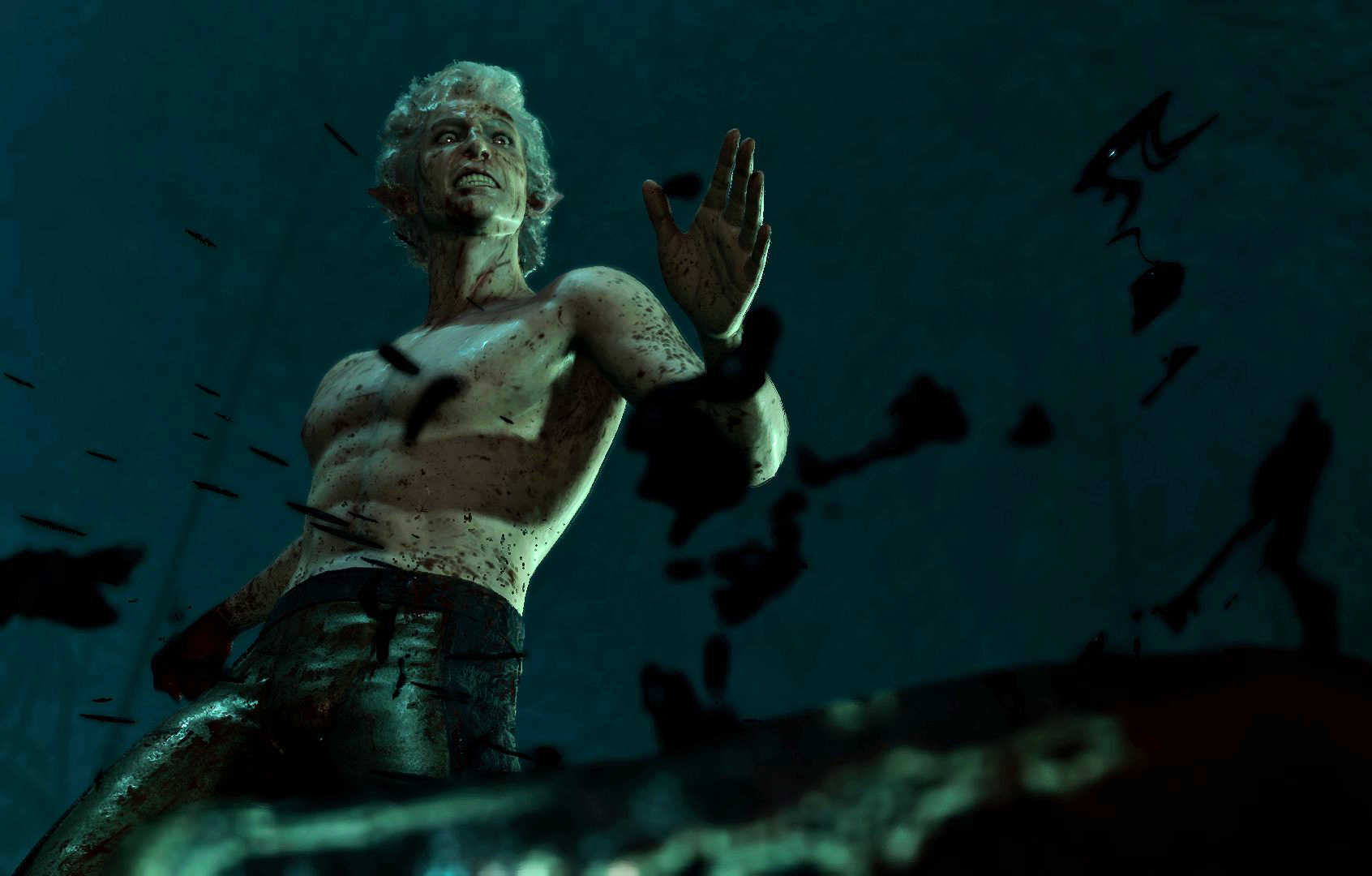
Sleepless, Astarion recalls the horrific night when Cazador carved a 'poem' into his skin. However, going through the agonizing flashback presents two choices:
Meeting Raphael[edit section | visual editor]
The episodes encountering 


After Raphael disappears, no companion reacts to the information about the scars, or has any comment, including those who might be romanced in the current playthrough.
Following the fulfillment of the agreement with Raphael outside the Grand Mausoleum, the cambion reveals the nature of the infernal scars to an Origin Astarion in the same manner as he would in a playthrough where Astarion is a companion. However, because Astarion is the primary protagonist in this scenario, the subsequent 'debrief' dialogue – where Astarion would typically explain the revelation to a player character – is absent. Companion reactions are adjusted to account for this shift in perspective; party members address Astarion directly in the second person regarding the ritual and his history, rather than discussing his condition as a third-party concern.
The only exception is 
Araj Oblodra[edit section | visual editor]
The encounter with 


After discussing her experiments, Araj still turns the conversation to Astarion's nature, and as Origin, he chooses himself whether to bite her or not. Despite getting the same result as a companion from tasting Araj's blood, the dialogue carries no persuasion checks or companion approval changes, let alone compromising a romantic relationship. Thus, for Astarion as origin it is completely safe (albeit unpleasant) to obtain both the 

Act Three[edit section | visual editor]
The Gur Camp[edit section | visual editor]
The encounter with the Gur tribe diverges significantly in an Origin Astarion playthrough. Unlike a companion walkthrough, an Origin Astarion cannot be captured or surrendered to
Consequently, in an Origin playthrough, the Rivington camp is always found intact, with the Gur performing their funeral rites upon the his arrival.
Another distinction concerns the funeral rite the tribe leader, 
Finally, none of the companions have any impact on Astarion's decision on whether to help the Gur or not, though their approval can still change as a result of his choice.
Meeting other spawn[edit section | visual editor]

The party led by Astarion as Origin can still meet 

First, Astarion can choose the style of the dialogue, where he can try to convince his siblings of the danger ahead, conceal the truth from them, or demonstrate his new abilities and thus to sway them to his side. Dalyria and Petras' reactions depends on the chosen approach, and offer various sets of dialogue options which can be used to obtain the necessary information from these spawn. Convincing them requires
Secondly, as a companion, Astarion inevitably drags Petras close to the sunlit window. As an Origin, he can choose whether to do it or simply to come under the daylight himself to prove his claims. In the latter case, he still can drag Petras there later to make a point. An attempt to grab Petras and roast him requires a
If this roll succeeds, Origin Astarion has the unique option to interrogate Petras by holding him in the sunlight. This interaction triggers approval or disapproval from party members based on Astarion's cruelty or mercy – a feature exclusive to the Origin playthrough. When Astarion is a recruited companion, these specific companion reactions do not occur, regardless of the choices made.
The narrative outcome of the scene is determined by Astarion's persistence during the interrogation. If he chooses to release Petras after his initial threat, Dalyria relents and discloses the location of the Rite of Profane Ascension. However, if Astarion continues to hold Petras in the sun, Petras eventually breaks free and both spawn flee the area. In this second scenario, Astarion fails to obtain the ritual's location (through this specific encounter).
The same futile outcome follows if Astarion fails any of the aforementioned rolls, or if he makes no effort to convince his siblings of his position.
Regardless of the chosen course of action, in the end both spawn turn into red mist and teleport away. If any party member has any daylight-producing effect applied to them, or an equipped item giving such an effect, both spawn teleport away without any option to start a dialogue.
[edit section | visual editor]
When the party speak with 

Spawn attack in the camp[edit section | visual editor]

The scene of Astarion's siblings' attack on the party's campsite also has several significant differences when Astarion is played as Origin.
If Astarion is a companion, the player character wakes up when Astarion is already arguing with 

The dialogue with both spawn also has differences. Initially, the basic options are the same: to persuade them, revealing the truth about the ritual, or deceive them in order to try and sway them to Astarion's side. In case the party have missed every opportunity to find out the true purpose of the ritual, this dialogue finally makes it plain. Also, the Origin version offers less ability checks to convince his spawn siblings.
Another difference is his siblings behaviour at the end of the dialogue. Seemingly being more gullible and pliant to Cazador's will, Aurelia argues with Astarion about the ritual's purpose in both cases. However, as an Origin she always defends the false promises proffered by Cazador, while in a companion version she may try to warn Astarion about their orders before being completely compelled to the master's will. Leon's lines also differ in the end. In a companion version he says their master ordered they leave no witnesses; in an Origin version he tells Astarion that Cazador commanded they "bring him as broken as possible, but alive".
Regardless of Astarion's dialogue choices and actions – even if he agrees to go willingly – the cutscene spills out in a fight with all four spawn. If Astarion is played as an Origin and is not downed in the fight, the party return to their resting tents afterwards, and the night rest can continue; no automated dialogue with any of party members is started.
House of Hope[edit section | visual editor]
When dealing with 
- I already lived an eternity devoted to pleasure, and it was rather dull.
- My body belongs to no one but me. Never again.[4]
Choosing these lines bears the same consequences as any other refusal: Haarlep becomes hostile to the party.
Exploring Szarr Palace[edit section | visual editor]
- The sealed ballroom door: For Astarion as an Origin, the same ability checks are offered to investigate the door:


- For History check, the result on success is the same as for any other character possibly passing it.
- Talking to


- If Astarion was downed and kidnapped during his siblings' assault on the party's camp, he also finds himself in the Kennel. This scene is identical regardless of Astarion is played as an Origin or recruited as a companion. Throughout it, Godey tries to subdue Astarion by projecting Cazador's willpower on him. Astarion has a chance to break off the magical shackles himself, passing one of
- However, if the chosen check is failed, Astarion's tadpole suppresses Godey's attempts, being a "highly territorial" creature and considering Astarion's mind its demesne. Regardless of the cutscene layout, Astarion must fight Godey to leave the Kennel. In this case, there is no chance to convince him to surrender the signet ring. Afterwards, Astarion is free to explore the palace or to leave it and join the party, though he still must leave the palace to fast travel.
Exploring Cazador's Dungeon[edit section | visual editor]
- Talking to


- Also, in the beginning of the conversation Astarion rolls a passive
- Talking to


- Also, unlike the companion playthrough, Astarion must pass

Finally, as an Origin, Astarion's dialogues with Sebastian and Chessa are more meaningful, containing several details on their previous encounters and on the prisoners' existance as vampire spawn, which are otherwise unavailable.
Confronting Cazador Szarr[edit section | visual editor]

The pre-combat Origin dialogue with Cazador is much different compared to a companion playthrough. It does not matter if Astarion confronts his former master while aware of the rite's purpose or is totally ignorant of it: Cazador himself fills in any gaps in knowledge.
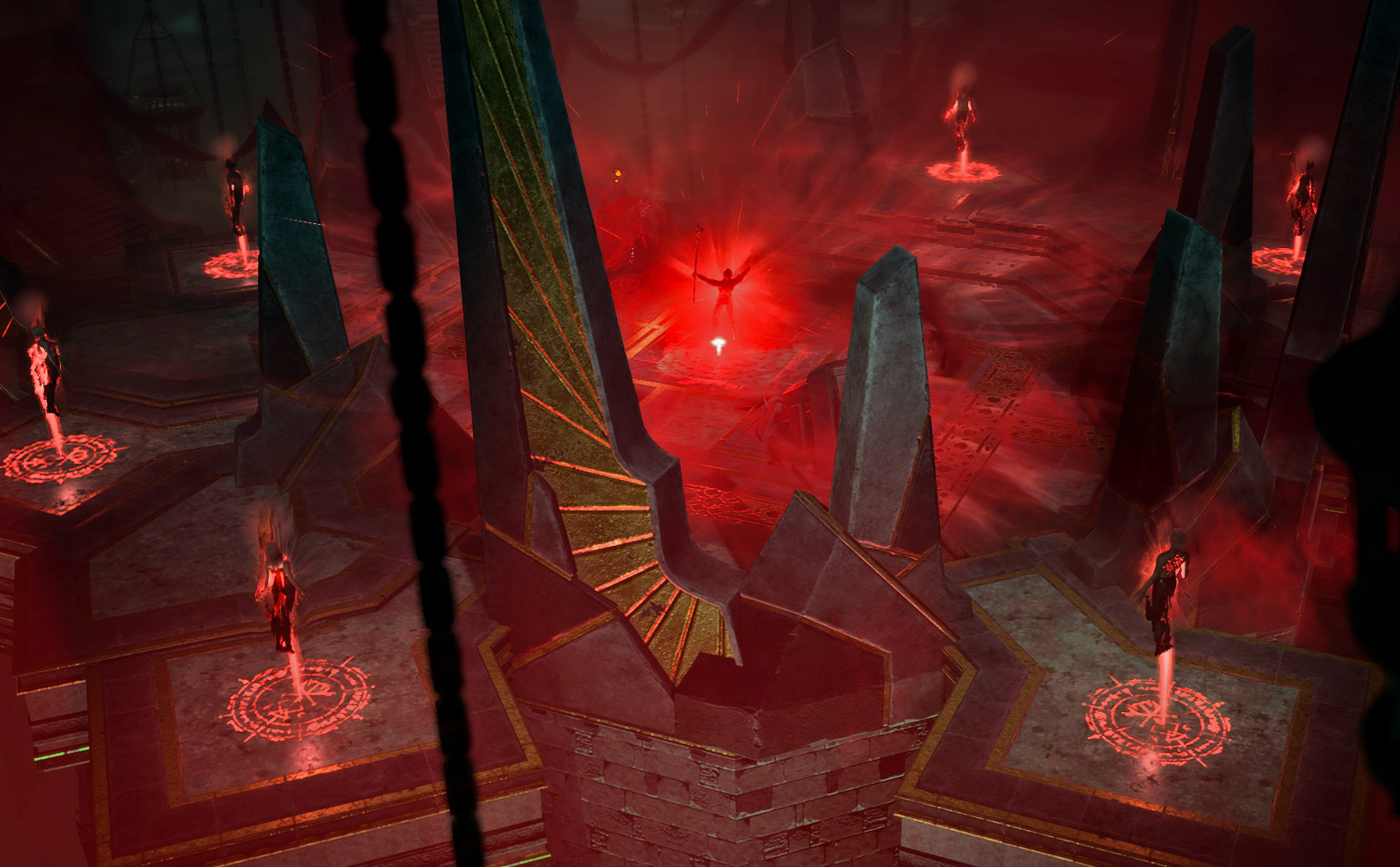
The salient part of this interaction occurs when Cazador attempts to subdue his most elusive spawn: Astarion can roll a
Failing the Constitution check (or giving in deliberately) results in Astarion being shackled and teleported to the ritual point prepared for him, and his receiving the 
If Cazador is reduced to 0 HP, he retreats into his sarcophagus to recover. After the fight is resolved, the party can interact with the sarcophagus to finish him off. If at this point they leave the dungeon and the palace above and take a Long Rest, Cazador restores, and the party must fight him again, though without his retinue and his buffs, as the initial dialogue with Astarion is not replayed.
Resolving the quest[edit section | visual editor]
While the final outcomes of the quest are identical, the narration shifts significantly in an Origin playthrough. As a companion, Astarion is predisposed to complete the Rite by default, and the scene’s tension relies on the player character's ability to see what really drives him and convince him do otherwise. In case of an Origin protagonist, the focus transitions to the direct confrontation of wills between Astarion and Cazador Szarr. The final decision is no longer a response to an ally’s intervention, but Astarion's personal instigation to conclude the cycle of abuse on his own terms. There is no option available for any companion to kill Cazador themselves, thus making the decision in Astarion's stead.
In the beginning of the dialogue Astarion can order Cazador to beg for his life, which first requires a
Upon making either decision and playing out the consequent cutscenes, this quest completes.
Completing the Ritual[edit section | visual editor]

The idea of placing Cazador in his stead to obtain the seventh sacrificial component appears to come to Astarion spontaneously. However, instead of him asking the player character to assist, any party member can offer help themselves, reacting to the sight of Astarion's scars, which – in an Origin playthrough – they see for the first time in full. The particular companion is picked at random. Oddly, this can include Jaheira and Halsin, who are not actually tadpoled, but remain ready to lend a hand. Of note, the companion who Astarion connects his mind with may be different to the one who offered help.
Remembering the scar composition requires a
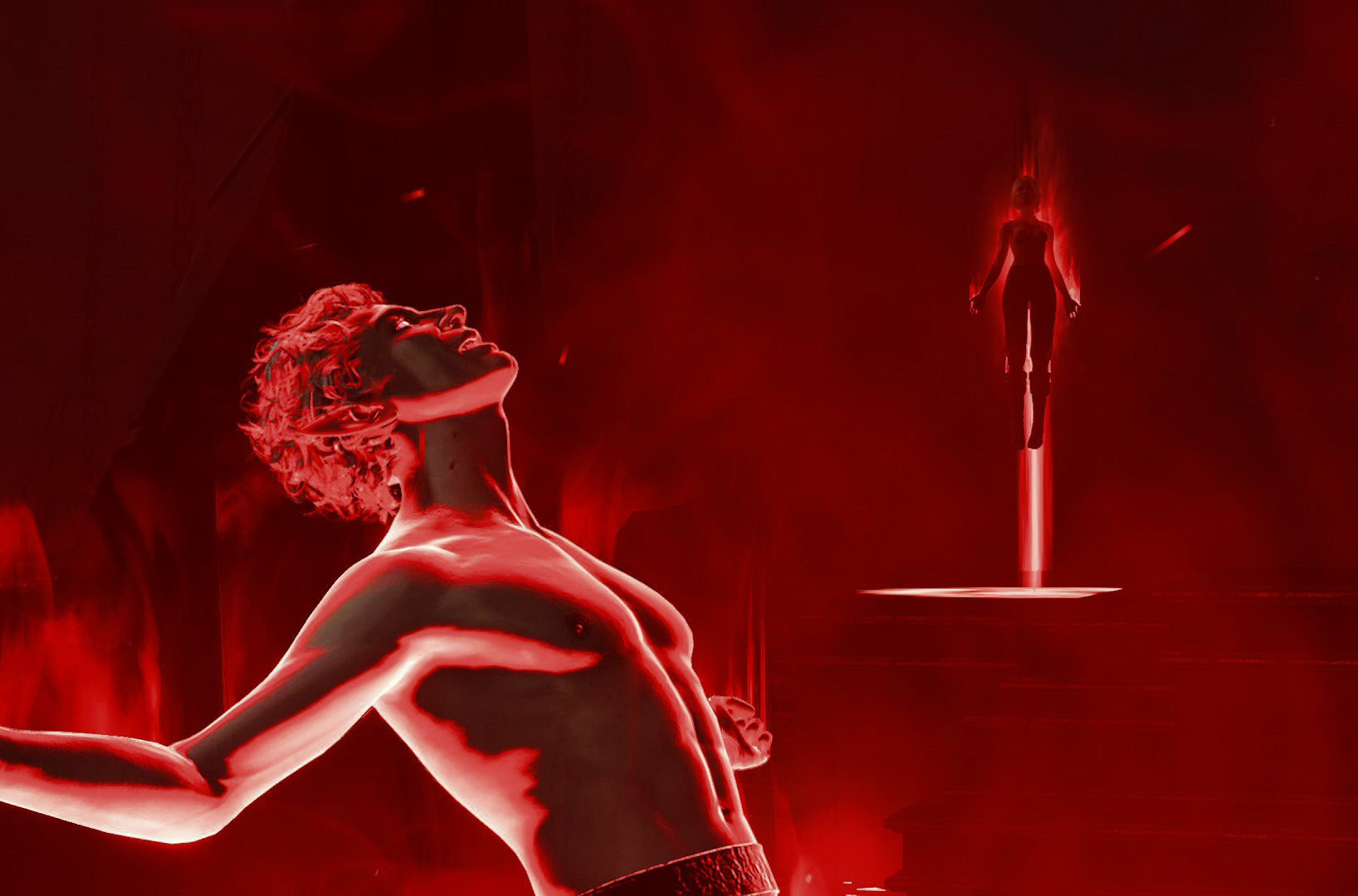
As with the companion playthrough, Astarion somehow knows the correct incantation despite no clear reference to his having any clues to it.[8] The cinematics of the rite differs, centering on Astarion, who hears the screams of thousands of vampire spawn being consumed.[9]
Also,
The companions' reactions both at the cusp of beginning the ritual and upon completing it are also picked at random; only Minthara and a Sharran Shadowheart approve of Astarion's ambitions, while all others try to discourage him before or express disappointment after. No ability checks are available to sway them.
Killing Cazador[edit section | visual editor]

Until Astarion chooses to actually begin the ritual, he retains the option to simply stab Cazador to death. The cutscene in this case is the same as a companion playthrough. Astarion's dialogue afterwards with his freed siblings differs slightly, though.
Dalyria, however, is more interested in the fate of the seven thousand captive spawn. The options to dispatch them are the same: kill them, release them, or leave them in their cells. Dalyria's reaction depends on Astarion's choice. If the captive spawn are freed, however, it is none other than Petras who comes up with the idea of leading them into the Underdark. After Astarion's siblings leave, a random companion reaction follows, depending on the decision made.
Encounter with Ulma[edit section | visual editor]
When the party approach the elevator to leave the dungeon, the Gur are already waiting for them. The dialogue with
Endgame[edit section | visual editor]

The final cutscenes are quite different depending on possible outcomes of the game playthrough. The particular cutscene depends on whether the party defeated the Netherbrain and / or Cazador, and on whether Astarion is in romantic relationship with any of his companions.
Ιf Astarion remains a vampire spawn while having at least one companion, the cutscene at the pier ends up for Astarion Origin similar to a companion playthrough: he is forced to leave his friends at the pier where they all contemplate the victory over the Netherbrain. This is the first time when his feelings from being exposed at the sunlight are described: first slight prickle, then stinging "as if covered with biting ants", and lastly, an intolearbly-hot sensation on all unprotected parts of the body. His companions (chosen randomly) react twice, warning him and urging him to hide. He runs and crouches under the cover of some crates. Later, he is shown in a cave approaching a tied person he captured for a meal.
The solo playthrough endings have slight differences depending on the outcome of his personal quest. Before Patch #4[verify] the cutscene showed Astarion pondering on his future existing – lurking from the sun in the shadow of the Central Watch Tower as a spawn or watching thoughtfully at his city from the top of its belfry as a Vampire Ascendant. As of current game version, the same dialogues are played out in the private room of the Elfsong Tavern.
As a Vampire Ascendant, the options which Astarion lay before himself are mostly the same which are on the offer for the Custom player character, who became his spawn: to rule Baldur's Gate, to see the world, or to confront those of former companions who might possibly pose a threat to Astarion's power over the city. The only difference is the fourth option, which is to start creating his own spawn to assist in conquering the world.

As a free vampire spawn, Astarion is ready to explore his new freedom - unhindered, but bought at the cost of everlasting hunger in the night. The choices he considers in this case are to become a freelance hero, to find a way to return to the sunworld, to travel wherever he wants to, or to visit the spawn in the Underdark in case they were saved from Cazador's dungeon (but actually to become their leader).
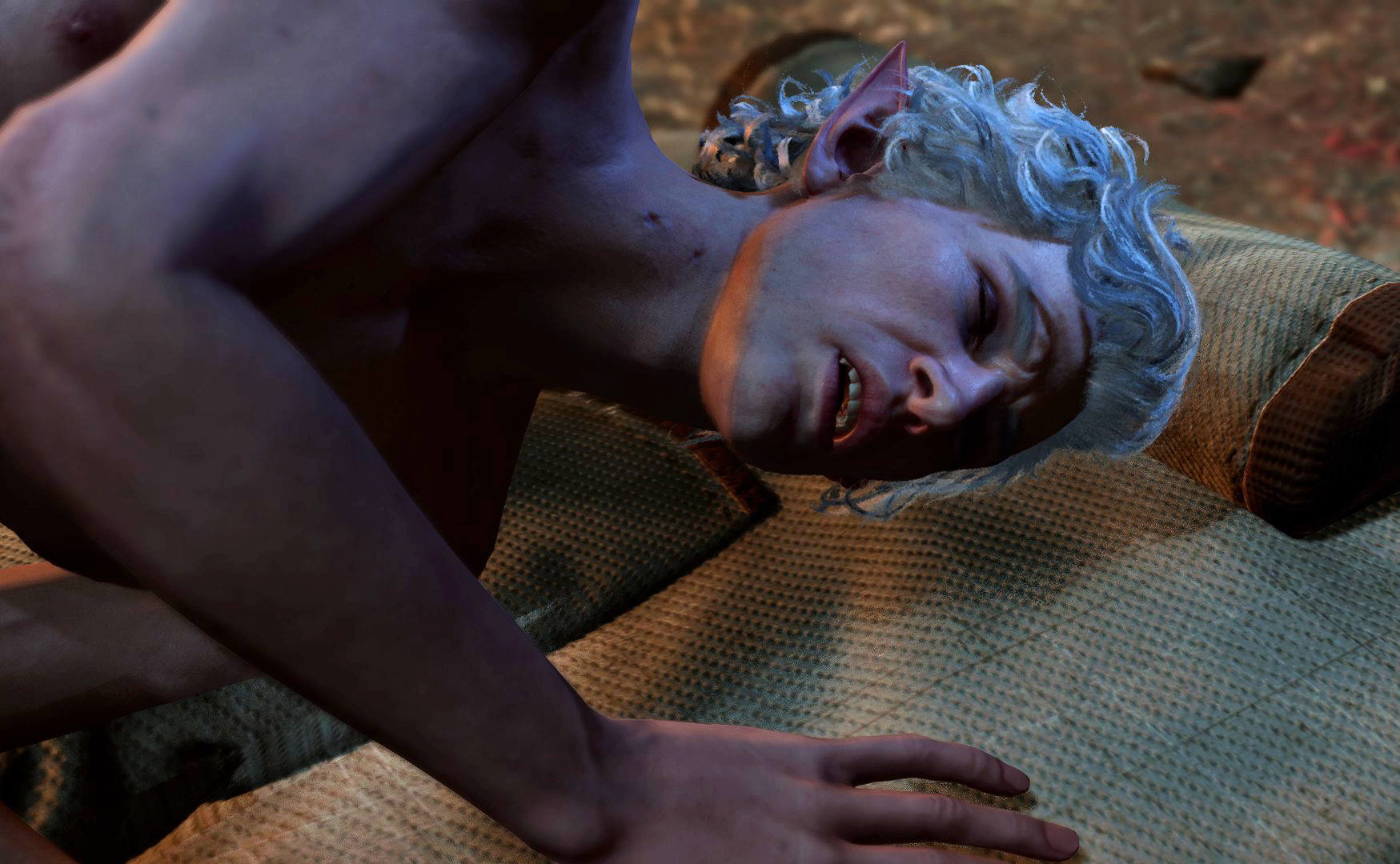
If Astarion is in an active romantic relationship, his cutscene choices are relevant to a certain partner,[10] and the start of his Epilogue sequence depends on the decisions made throughout this dialogue.
If the 
The Epilogue[edit section | visual editor]
At the Reunion Party, Astarion also has several unique dialogue options both as a spawn and as a Vampire Ascendant. For example, as a spawn romacing Gale, he can mock him about opening a book club for the vampire spawn in the Underdark, while as an Ascendant he can invite Jaheira to one of his parties or discuss with Minthara the tastes of blood of Baldurians from various city districts.
As a Vampire Ascendant, Astarion obtains a unique shapeshifting action, the 

Notes and references[edit section | visual editor]
- ↑ In a companion playthrough, this check is normally available only to a drow character, but Astarion rolls it anyway, which might be a bug of mismatching Elf/Drow Elf racial tags.
- ↑ This course of dialogue is available regardless of whether the player character has already consumed any tadpoles.
- ↑ Métier (pronounced met-yay or meh-tee-ay) refers to a person's calling, trade, or occupation, specifically a field of work for which they are particularly suited, skilled, or talented. Derived from French, it suggests a specialty, forte, or "true calling," rather than just a regular job.
- ↑ Source:
LOW_HouseOfHope_ROM_Incubus. These lines are also available if Astarion is a recruited companion in the current playthrough, but was chosen for interacting with Haarlep. - ↑ At this moment, Astarion can tell Sebastian that he was already planning to kill Cazador. Using these lines allows to bypass the checks. Source:
LOW_CazadorsPalace_Cells_OM_Astarion_AOM_OOM. - ↑ Not nearer than the last staircase flight before the ritual ground, approximately X: -1926 Y: 910
- ↑ Sometimes, if the check is failed, even party members standing close enough are not automatically engaged in the battle against Cazador, which may cause the party to lose precious time.
- ↑ Presumably, there are two sources of such knowledge:


- ↑ In the current (5th) edition of D&D, the official stance is that vampires do not have souls. The Monster Manual (p. 295) explicitly states:
- "Vampires have no soul, and that is why they have no shadow or reflection."
- "Vampires have no soul, and that is why they have no shadow or reflection."
- ↑ If he has had sexual intercourse with Halsin along with another romance, and did not end the relationship with Halsin through the dialogue before going to Morphic Pool, there are two identical cutscenes with both shown one after another.